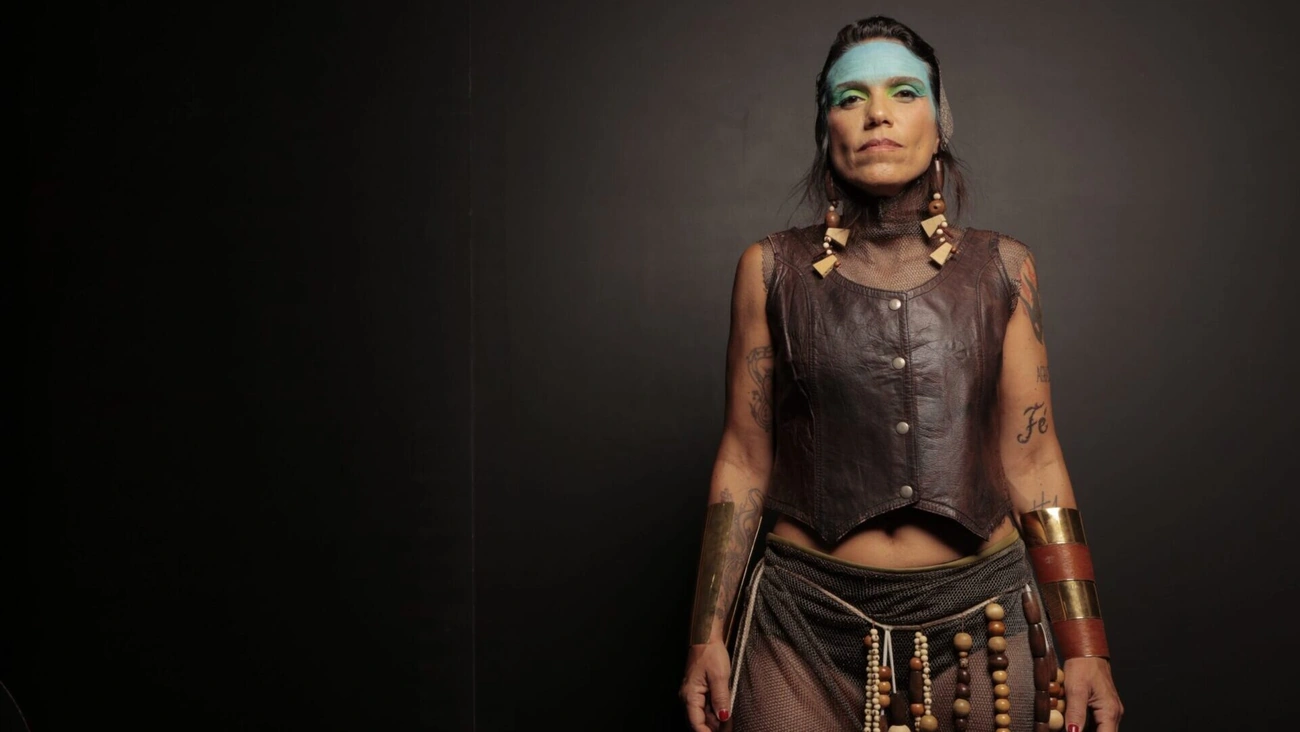
The multi-instrumentalist from Bahia, Michelle Abu, releases her second authorial album, Qual é o Tambor, a work that reflects her trajectory of over 30 years in music. The album, which recently arrived on digital platforms, is the result of three years of work, initiated during the pandemic, and brings together diverse collaborations from artists such as Karol Conká, Catto, Otto, Lirinha, and the indigenous choir Os Guaranis. Michelle Abu, known for her work with the band Didá and for being one of the greatest percussionists of her generation, having worked alongside names like Elza Soares and Margareth Menezes, presents a work that mixes Afro-Brazilian tradition, references from urban music, and plenty of sound experimentation.
Michelle Abu is an artist who believes in the collective and in encounters, and was inspired by the diversity of Brazilian cultural manifestations to create Qual é o Tambor. The album features a variety of musical styles, including samba de roda, carimbó, pagodão, afrobeat with grooves of Bahian music, baião, and aguerê of Oxossi. The artist highlights that the drum is a cultural and political element in her work, and wishes to contribute to redefining percussion beyond its accompaniment function, evidencing the instrument as its own narrative. With compositions and productions signed by her, the album also presents collaborations where the artist shares credits with other musicians, demonstrating her commitment to the collective and diversity in music.
The production of the album was carried out in a tranquil manner, without external time pressures, from a house in the countryside, a battery, and grooves and ideas in Michelle Abu’s head. This process allowed the artist to explore different sounds and styles, resulting in a work that reflects her long trajectory in music. With tracks that range from a samba de roda about the neighborhoods of the lower city in Salvador to a rock ballad, Qual é o Tambor is an album that seeks to broaden the feminine presence in the territories of percussion and show the richness of Brazilian music. Michelle Abu’s work is also a tribute to the drums, instruments that, according to her, are fundamental to Brazilian music and to which she dedicates 30 years of her career.
The release of Qual é o Tambor is an important milestone in Michelle Abu’s career, who seeks with this album to contribute to the redefinition of percussion and broaden the feminine presence in music. With a consolidated trajectory and a diversified discography, the Bahian artist presents a work that reflects her passion for music and Brazilian culture.