
18-Year-Old Catches 41kg River Monster in Brazil, Shocking Video Today

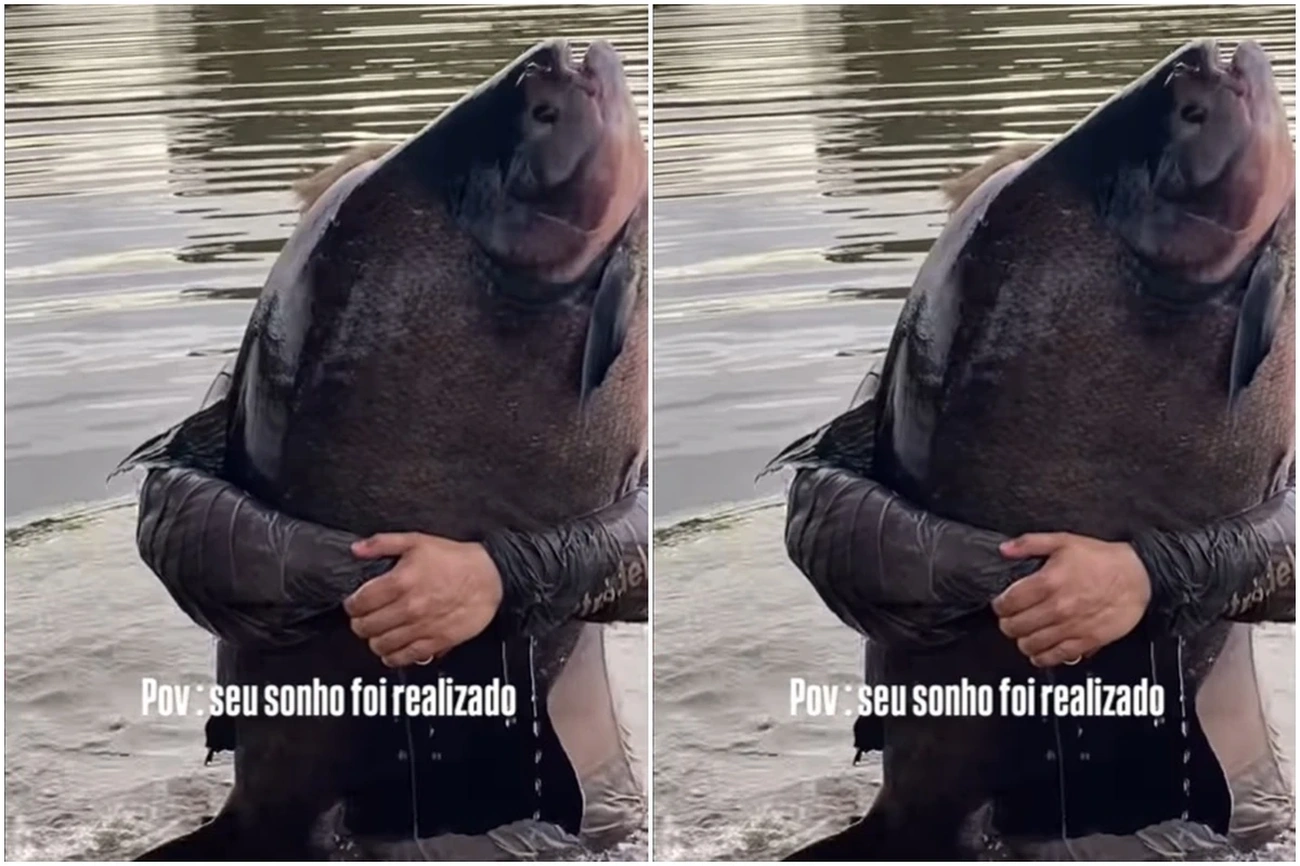
A young sport fisherman, 18-year-old Daniel Queiroz Borges de Oliveira, made history in Caldas Novas, Goiás, by catching a tambacu weighing 41 kg, known as one of the “monsters of the rivers”. The catch was recorded and posted on social media by Daniel, who is a sport fisherman and practices the hobby activity without commercial purposes, prioritizing animal welfare. Sport fishing is based on the “catch and release” system, where the fish is caught, photographed and safely returned to the water.
The capture of the tambacu was a moment of great celebration for Daniel, who regularly shares his fishing experiences on social media. The tambacu is a species of fish that can be found in rivers and lakes in the region and is known for its size and strength. Sport fishing is an activity that aims to interact with nature and respect the environment, and Daniel is an example of how this mode can be practiced in a responsible and sustainable way. With this capture, Daniel showed his skill and experience as a sport fisherman, and his achievement was celebrated by his followers on social media.
Sport fishing is a leisure activity that has been growing in popularity in Brazil, and cases like Daniel’s show the importance of responsible and sustainable fishing practices. The “catch and release” system is an approach that aims to minimize the impact of fishing on the environment and ensure the conservation of fish species. With the capture of the tambacu weighing 41 kg, Daniel showed that it is possible to practice sport fishing in an exciting and responsible way, and his achievement can serve as an inspiration for other young fishermen.
The capture of the tambacu also raises questions about the conservation of water resources and the importance of sustainable fishing practices. Sport fishing can be an important tool for the conservation of fish species and the promotion of eco-tourism, but it is essential that it is practiced in a responsible and respectful manner with the environment. Given the current scenario of environmental challenges, cases like Daniel’s show the importance of individual and collective actions for the conservation of nature and the promotion of sustainable practices.
Analise este conteúdo com IA